DJ insurance: key facts
- Hotels, function rooms and wedding venues usually ask DJs for a public liability certificate, most often for £5 million and sometimes £10 million.
- Public liability is not a legal requirement for a sole-trader DJ, but without it many venues will not let you play.
- A sole-trader DJ or entertainer typically pays roughly £50 to £130 a year for public liability only (rough guide, including 12% Insurance Premium Tax).
- Many venues also ask for a current PAT or electrical safety record for your kit. The Electricity at Work Regulations 1989 require work equipment to be kept safe.
- Public liability does not cover your own equipment. Decks, speakers and lighting need separate DJ equipment insurance.
- Employers' liability is a legal requirement once you employ anyone, including a paid roadie, with at least £5 million of cover. Fines can reach £2,500 a day.
What does DJ insurance cover?
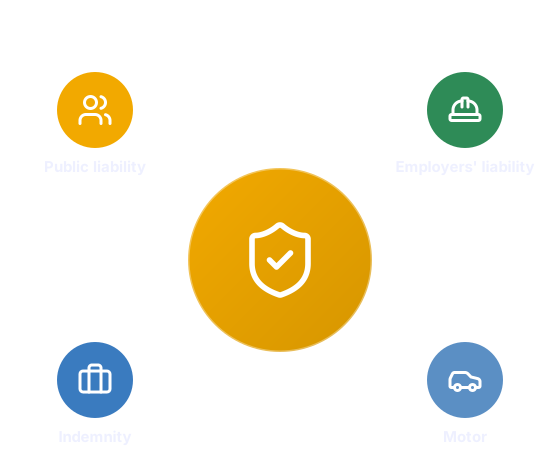
DJ insurance is usually a package built around public liability, which pays claims if your set-up injures someone or damages a venue, and DJ equipment insurance, which pays to repair or replace your kit. Entertainers who hire help add employers' liability.
| Cover | What it protects | Who needs it |
|---|---|---|
| Public liability | Injury to guests or damage to the venue caused by your rig, such as a trip over a cable. | Every DJ and entertainer. Most venues ask for proof of it. |
| DJ equipment | Decks, laptops, speakers, lighting and cases if stolen or damaged, at gigs, in transit and at home. | Anyone whose kit would be expensive or slow to replace. |
| Cancellation and loss of bookings | Lost fees or emergency kit hire if you can't perform for an insured reason. | Wedding and corporate DJs. |
| Employers' liability | Claims from roadies, helpers or second DJs injured or made ill working for you. | A legal requirement once you employ anyone, including casual paid helpers, unless an exemption applies. |
| Personal accident | A payout if an injury, such as a back injury carrying speakers, stops you working. | Sole traders with no sick pay. |
| Product liability | Harm caused by things you hand out or apply, such as face paint, balloons, sweets or party bags. | Children's and party entertainers. |
| Professional indemnity | Claims that a mistake, such as a double booking, cost a client money. | Agencies and DJs who plan events. |
| Business vehicle use | Driving your kit to and from gigs. | Every mobile DJ. Arranged through your motor insurer, not the DJ policy. |
Public liability insurance for DJs: what venues ask for
Most hotels, function rooms and wedding venues ask DJs to send a public liability certificate, usually for £5 million, and a current PAT or electrical safety record before the event. Some larger venues, councils and corporate clients ask for £10 million and a risk assessment.
| Where you play | Public liability usually asked for | Other common requests |
|---|---|---|
| Hotel or function room | £5m | PAT records, smoke or haze machine rules, load-in times, cable routes kept clear of fire exits. |
| Wedding venue or barn | £5m, sometimes £10m | PAT records, noise limiter compliance, finish time, no haze or a request to isolate fire detectors. |
| Council event, festival or corporate | £5m to £10m | Risk assessment, method statement, PAT records, sometimes employers' liability. |
| School, nursery or community hall | £5m | DBS check for children's entertainers, a list of what you'll bring. |
Keep your certificate and PAT records on your phone; some venues won't let you unload until they've seen them.
Is DJ insurance a legal requirement?
No law makes a sole-trader DJ or entertainer buy public liability or equipment insurance. Employers' liability is the exception: it is a legal requirement as soon as you employ anyone, with at least £5 million of cover.
- Public liability: not legally required, but a condition of most bookings. You are personally liable for injury or damage you cause, insured or not.
- Employers' liability: required under the Employers' Liability (Compulsory Insurance) Act 1969 once you employ someone, such as a paid roadie or second DJ. Fines can reach £2,500 a day. Northern Ireland has its own equivalent law.
- Business use on motor insurance: driving kit to gigs is business use, which social, domestic and pleasure cover may not include.
How much does DJ insurance cost?
As a rough guide, a sole-trader DJ or entertainer pays about £50 to £130 a year for public liability only, including Insurance Premium Tax. Adding cover for DJ, sound and lighting equipment usually brings that to £150 to £400, depending mostly on what your kit is worth.
| Typical set-up | Rough guide price per year |
|---|---|
| Sole trader DJ or entertainer, public liability only | £50 to £130 |
| Sole trader adding DJ, sound and lighting equipment | £150 to £400 |
| Entertainment business with staff or roadies (adds employers' liability) | £400 to £1,000 |
Rough guide price per year for each set-up in the table above
What affects the price of DJ insurance:
- Equipment value: the biggest factor once you add kit cover. Insure for the cost of replacing it new.
- Where kit is kept: a locked house costs less to insure than a van on the street.
- Liability limit: £5m or £10m costs a little more than £2m.
- What you do: pyrotechnics, foam parties, fire acts and children's parties may change the price.
- Staff, excess and claims history: wages raise the employers' liability cost; previous theft claims push premiums up.
Mobile DJ insurance: what to check before you buy
Before buying mobile DJ insurance, check the policy covers your kit in vehicles and at venues, not just at home, that the liability limit matches what your venues ask for, and that every service you offer, from haze machines to children's parties, is named on the schedule.
| Check | Why it matters for DJs |
|---|---|
| Theft from vehicles | Many policies exclude it overnight or require an alarmed, locked vehicle with kit out of sight. |
| Unattended kit at venues | Leaving gear set up while you go for food, or overnight before a wedding, may not be covered. |
| Accidental damage | Drinks spilt on controllers and dropped speakers are common; basic cover may be theft and fire only. |
| Single item limit | A £3,000 speaker pair or laptop may exceed a £1,000 per-item limit unless listed. |
| Liability limit | £5m suits most venues; check before you take a festival or corporate booking. |
| Activities covered | Smoke and haze, pyrotechnics, foam, karaoke, games and face painting may be excluded unless declared. |
PAT testing for DJs and other rules entertainers should know
There is no law that says a DJ must have PAT testing, but the Electricity at Work Regulations 1989 require electrical equipment used at work to be kept safe. A PAT test record is the usual way to show a venue your kit is safe, and many ask for one dated within the last 12 months.
Electrical safety. Amps, powered speakers, lighting, extension reels and IEC leads all count. Check leads before every gig and retire anything damaged; daisy-chained extension leads are a common weak point.
Cables, stands and trusses. The Health and Safety at Work etc. Act 1974 means you must not put others at risk. Tape or cover cables away from dance floors, keep fire exits clear, and weight or secure speaker stands and lighting trusses.
Smoke and haze machines. Haze can set off smoke detectors, and a false alarm can mean an evacuation. Some fire and rescue services and venues can charge for false alarm call-outs. Get the venue's agreement in writing first; many liability policies won't pay these charges.
Noise and hearing. Many venues have noise limiters that cut the power. Protect your own hearing, and if you employ staff the Control of Noise at Work Regulations 2005 apply to them.
Music licensing. The venue usually holds the PPL PRS licence for playing music in public. DJs who copy music onto a laptop or hard drive, rather than playing original purchased media, may need their own ProDJ licence. Check the current rules on the PPL PRS website.
Children's entertainers. Schools, nurseries and many parents expect an enhanced DBS check. Use cosmetic-grade face paints, ask about allergies, including latex if you use balloons, and follow the manufacturer's age guidance for props and giveaways.
DJ equipment insurance: protecting your kit
DJ equipment insurance pays to repair or replace your decks, laptop, speakers and lighting if they are stolen, lost or damaged. For mobile DJs, the key is cover away from home: in your vehicle, at venues and while loading in and out.
Most gear goes missing in the car park, not mid-set. Park close to the door, never leave kit visible in a vehicle, and keep laptops and headphones behind the booth.
- List high-value items with serial numbers and photos. It speeds up claims.
- Back up your music library: insurance replaces the laptop, not your playlists.
- Carry backup kit such as a spare controller or a phone with a set loaded.
Common DJ and entertainer insurance claims
The most common claims against DJs and entertainers are guests tripping over cables, falling stands or lights, damage to venue floors and walls during load-in, and stolen equipment from vehicles.
| What happened | Cover that might respond |
|---|---|
| A wedding guest dancing near the booth catches a speaker cable and fractures a wrist. | Public liability |
| A lighting stand topples onto a table, cutting a guest and smashing glassware. | Public liability |
| A flight case gouges a hotel's oak floor during load-in. | Public liability |
| A controller, laptop and headphones are taken from a locked van at a services. | Equipment cover, if theft from vehicles is included |
| A drink is knocked into a mixer mid-set. | Equipment cover with accidental damage |
| A child has a reaction to face paint at a birthday party. | Product or public liability, depending on the policy |
| A paid helper strains their back lifting a sub bass. | Employers' liability |
Starting a mobile DJ or entertainment business: checklist
To start as a mobile DJ or entertainer, register as self-employed, get your kit PAT tested, buy public liability at the level your venues ask for, insure your equipment, add business use to your car, and use clear booking contracts.
- Register as self-employed with HMRC and keep records of fees and kit purchases.
- Get your equipment PAT tested and keep the record on your phone.
- Buy public liability insurance, usually £5 million.
- Insure your DJ equipment for its full replacement value, including in vehicles.
- Add business use to your motor insurance.
- Check your music licensing if you play copied or downloaded tracks.
- Use a booking contract covering deposits, cancellation and power needs.
- Get a DBS check if you will work at children's parties or schools.
- Add employers' liability before paying anyone to help.
Entertainer insurance: use a broker or buy online?
Buying entertainer insurance online works well for a solo DJ with standard kit. A broker is more useful if you have high-value equipment, use haze or special effects, do children's parties, play abroad, or employ roadies and second DJs.
Online policies often have low single-item limits or vehicle exclusions. A broker who arranges cover for DJs and entertainers can compare insurers, explain the theft and accidental damage conditions, and help if you need to claim.
For every type of business cover, see our small business insurance guide.
Related guides
DJ insurance: frequently asked questions
Is DJ insurance a legal requirement in the UK?
No law requires a sole-trader DJ to have public liability or equipment insurance, but most venues ask for public liability before you can play. Employers' liability is a legal requirement once you employ anyone, including a paid roadie, with at least £5 million of cover.
How much does DJ insurance cost?
As a rough guide, a sole-trader DJ or entertainer pays about £50 to £130 a year for public liability only, including 12% Insurance Premium Tax. Adding DJ, sound and lighting equipment cover typically brings it to around £150 to £400.
How much public liability insurance does a DJ need?
£5 million is what most hotels, function rooms and wedding venues ask for. Some councils, festivals and corporate clients want £10 million, so check the booking terms.
Do DJs need PAT testing?
There is no specific law requiring PAT tests, but the Electricity at Work Regulations 1989 require work equipment to be kept safe. Many venues ask for a PAT record from the last 12 months.
Does DJ insurance cover my equipment being stolen from my car?
Only if your equipment cover includes theft from vehicles, usually with the vehicle locked and kit out of sight. Many policies exclude it overnight.
Does public liability cover my smoke machine setting off the fire alarm?
Not usually. Public liability covers injury or property damage, not a venue's call-out charges. Get the venue's agreement before using haze.
Do I need my own music licence as a DJ?
The venue normally holds the PPL PRS licence for playing music in public. If you play copied or downloaded tracks from a laptop or hard drive, you may need a ProDJ licence, so check the PPL PRS website.
Does my helper need employers' liability insurance?
If you pay someone to help carry kit or run lights, they may count as your employee and you would need employers' liability. A narrow exemption exists for close family members, but not for limited companies.
Do children's entertainers need insurance?
Most schools, nurseries and halls expect public liability. If you face paint or hand out balloons or sweets, check product liability covers those too.
Do children's entertainers need a DBS check?
Not always for private parties, but schools, nurseries and many parents expect an enhanced DBS check.
Am I covered if I can't make a wedding because my kit fails?
Only if your policy includes cancellation or loss of bookings cover. Carrying backup kit is the best protection.
Does my home insurance cover my DJ equipment?
Usually not. Most home contents policies exclude business equipment, so you need DJ equipment insurance.